Case Studies
How Aspherix® and CFDEM®coupling solve real particle process questions, from tablet presses to blast furnaces. Filter by industry or process and open a card for the details.
Industry

What our users found out
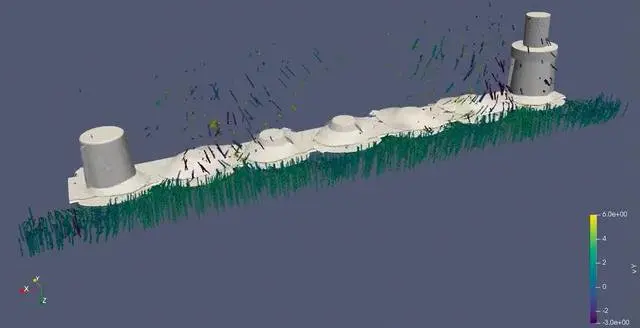
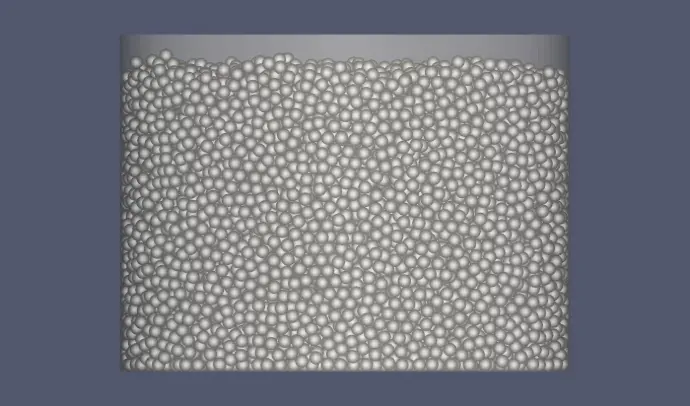
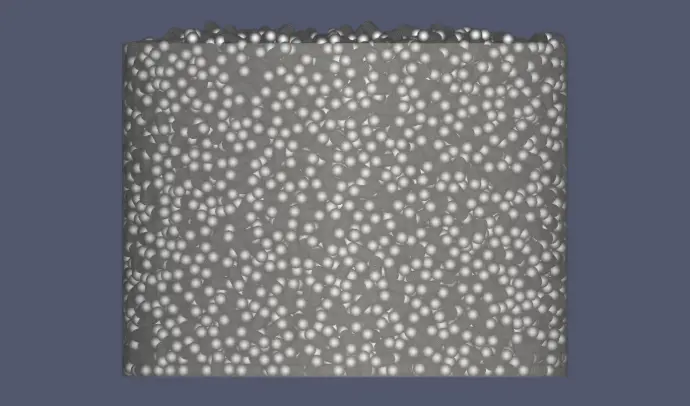
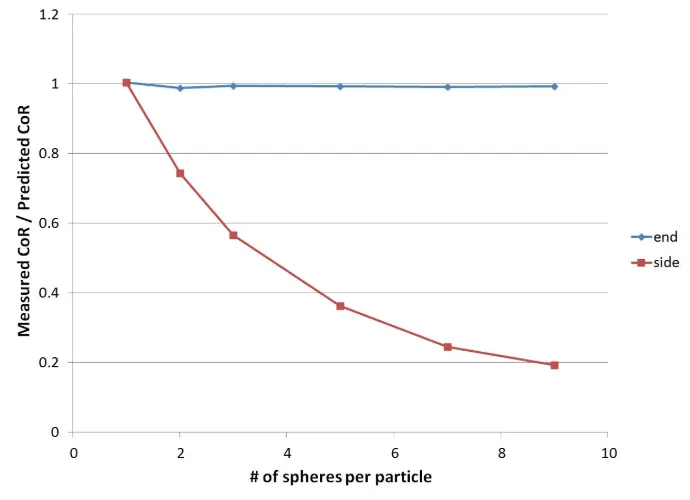
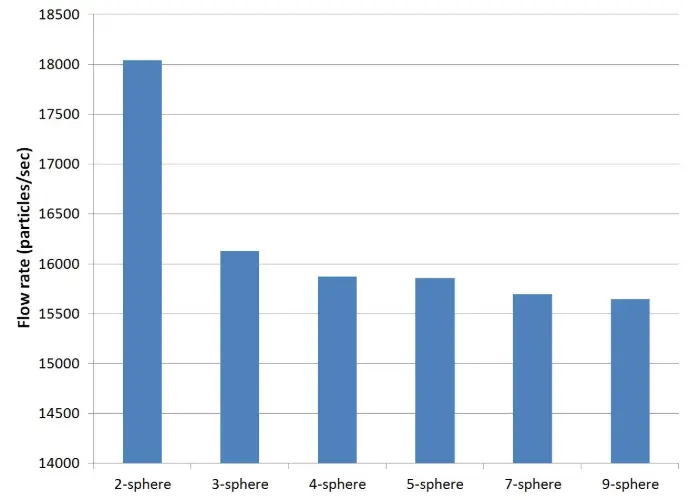
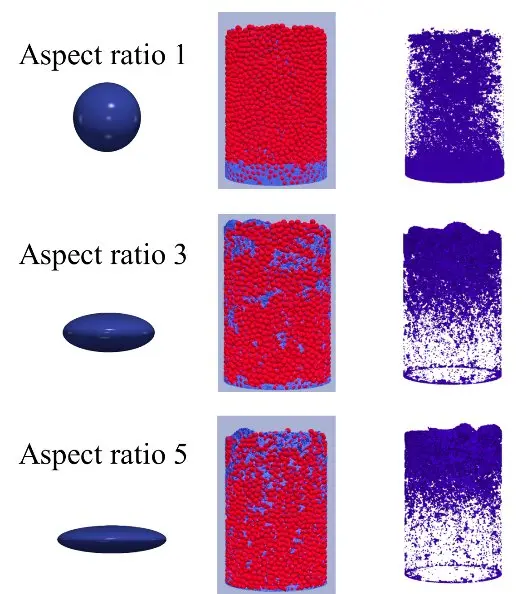
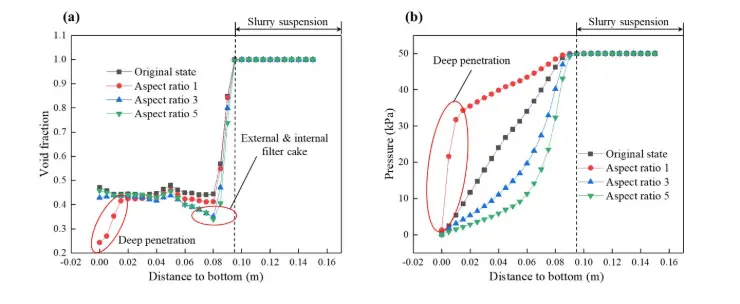
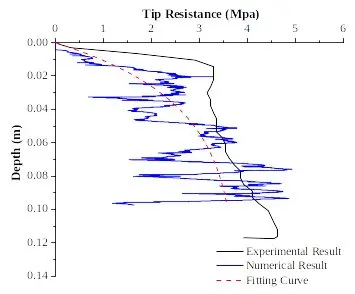
Not every study starts with a machine. In these notes, customers and research groups share results on modelling questions that matter in many applications: particle shape, calibration and fluid forces on non-spherical particles.
Questions our customers brought to us
Every case study above started with a question like these.
Does the blend segregate in a commercial-scale tablet press feed system?
Pfizer used a coupled CFD-DEM model of the full feed system.
How does the burden distribute in the blast furnace, and where does the hot gas flow?
Digital twin with laser-scanned particle shapes and gas-solid heat transfer.
Where do liners and lifters in a ball mill wear, and how does the worn geometry change the mill?
Wear calculated with Finnie’s model; the geometry deforms as it wears.
Which mower deck design gives the best cut quality, when the blade paths overlap?
Immersed boundary model built for this case; results matched the experiments.
How long does a helical mixer need for a homogeneous blend, and at what energy cost?
Over one million multi-sized particles on GPU.
How much active ingredient does an inhaler release from its carrier particles?
Four-way coupled CFD-DEM, one million particles in a one-million-cell mesh.
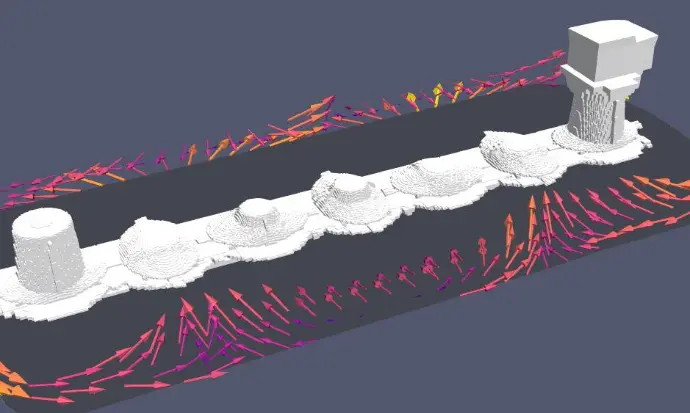
Will floating logs clog a weir during a flood?
Multisphere logs coupled with free-surface water flow.
How does the electrode structure change during calendaring?
Active and additive particles linked by binder bonds; the layer gets about 30% thinner.
Can a conveyor lift angular lunar regolith reliably in lunar gravity?
Non-spherical regolith and stick-slip behaviour, before any hardware is built.
Interested in modeling your process?
Tell us about your application and we will show you how Aspherix® and CFDEM®coupling can help.